How to Write a Band Press Kit That Gets You Booked
A press kit is your band's resume. It is the document that venue owners, festival bookers, journalists, and promoters use to decide whether to work with you. A great press kit opens doors. A mediocre one gets deleted.
The good news is that creating an effective press kit is not complicated. It does not require a massive budget or professional design skills. It requires understanding what the people reading it actually need, and presenting your band in the clearest, most compelling way possible.
What Is a Press Kit and Why Do You Need One?
An electronic press kit (EPK) is a digital package that contains everything someone needs to evaluate and potentially book your band. It typically lives as a single webpage or a downloadable PDF, and it includes your music, photos, biography, contact information, and relevant achievements.
You need one because nobody is going to dig through your social media to piece together who you are. Venue bookers receive dozens of submissions per week. They need to make quick decisions, and they will choose the band whose press kit makes that decision easy. If your EPK is confusing, incomplete, or hard to navigate, they will move on to the next one.
The Essential Components
Professional Photos
Your photos are the first thing people see, and first impressions are everything. You need at least two types of photos: a high-resolution band photo for promotional use and a logo or simpler image for smaller formats.
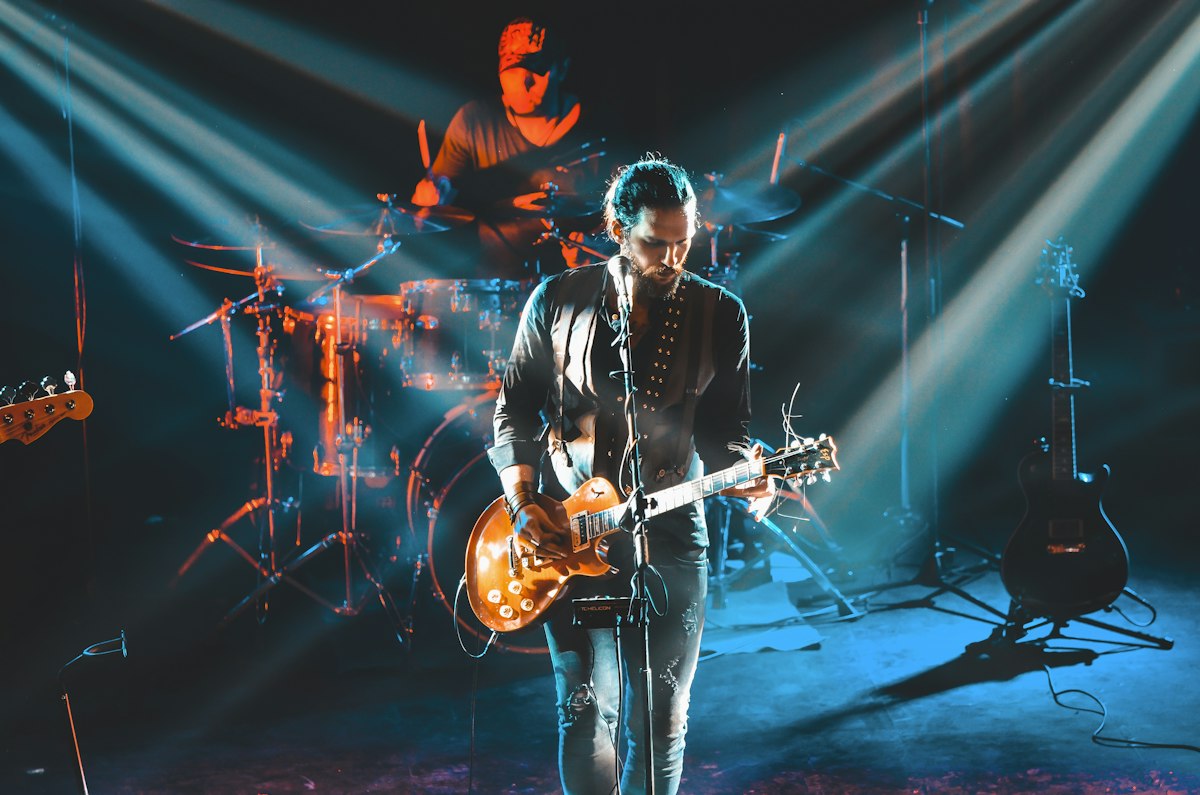
Invest in professional photography if at all possible. Smartphone photos, even good ones, signal that you are not taking this seriously. Your photos should reflect your band's aesthetic—if you play dark, moody music, your photos should match. If you are a high-energy party band, your photos should convey that energy.
Include both horizontal and vertical orientations, as different publications and venues have different layout needs. Provide them in high resolution (at least 3000 pixels on the longest side) so they can be used in print.
A Compelling Biography
Your bio is not your life story. It is a marketing document designed to communicate who you are, what you sound like, and why someone should care—all in under 300 words.
Start with a strong opening sentence that captures attention. Avoid clichés like "formed in 2023 by a group of friends who love music." Instead, lead with what makes you distinctive: "SetSync is a five-piece funk-rock band from Portland blending vintage groove with modern production."
Include your key achievements: notable venues played, festivals, radio play, streaming numbers, or notable collaborations. Be specific—numbers and names carry weight. "Played to 500+ crowds at the Doug Fir Lounge" is far more compelling than "played popular local venues."
End with a sentence about your current activities and goals. This shows momentum and gives the reader a sense of where you are headed.
Write two versions: a short bio (two to three sentences) for quick reference and a longer version for detailed listings.
Music Samples
This is the most critical component. Your music needs to be instantly accessible—no downloads, no streaming service searches, no friction. Embed a player directly in your EPK or link to a page where tracks play immediately.
Include three to five of your best songs. Choose tracks that represent your range while staying within your strongest style. Lead with your most accessible, catchy track. If you have recordings that showcase different sides of your sound, include them, but do not include weak material just to show variety.
If you have live performance recordings or videos, include those too. They demonstrate what a venue can expect from your actual show, which is ultimately what they are booking.
Video
Video is increasingly important. A well-produced live performance video or music video gives bookers confidence that you can deliver on stage. Keep it embedded directly in the EPK—do not make them click through to YouTube and risk losing them.
If you do not have professional video, even a well-shot phone video of a strong live performance is better than nothing. The goal is to show that you are a capable, engaging live act.
Notable Achievements and Press
List any press coverage, radio play, awards, or notable shows you have played. Include quotes from reviews if you have them—a single line from a reputable source carries enormous weight.
If you are a newer band without much press yet, focus on the achievements you do have: streaming numbers, social media following, sold-out local shows, or notable venues. Honesty is more effective than exaggeration—bookers can spot inflation from a mile away.
Contact Information
Make this prominent and complete. Include the name, email, and phone number of the person handling bookings. If you have a booking agent, list them. Include links to your website and social media, but do not make people hunt for a way to reach you.
Stage Plot and Technical Requirements
For more professional bookings, include a stage plot showing where each member stands and what inputs they need. This signals that you are organized and professional, and it saves the venue's sound engineer time. A simple diagram is fine—you do not need CAD-quality artwork.
Include a brief list of technical requirements: number of vocal mics, DI boxes needed, backline expectations, and any special needs. Keep this realistic and flexible—demanding elaborate setups for a small club gig signals inexperience.
Format and Delivery
The best format for an EPK is a dedicated webpage. It is always accessible, easy to update, and works on any device. Services like Bandzoogle, Squarespace, or even a well-designed Notion page work well. Avoid sending large email attachments—link to your EPK instead.
Keep it clean and focused. White space is your friend. Do not cram every photo, every song, and every review onto the page. Curate ruthlessly. Your EPK should present the best version of your band, not the most complete version.
Make it mobile-friendly. Many bookers review submissions on their phones during breaks. If your EPK does not render well on mobile, you are losing opportunities.
Common Press Kit Mistakes
Too long. If your bio is 800 words, nobody is reading it. Keep it tight and skimmable.
Low-quality photos. Blurry, poorly lit, or badly composed photos signal amateurism. This is the single most common EPK mistake.
Broken or missing music links. Test every link before you send your EPK to anyone. A booker who clicks a dead link will not follow up.
No clear contact info. If a booker has to search for your email, they will not bother.
Overstated achievements. Claiming you have played for thousands when your biggest show was 200 people will be discovered and will destroy your credibility.
Keep It Updated
Your EPK is a living document. Update it whenever you have new achievements, new music, new photos, or significant changes to your band. An outdated EPK with stale information signals that you are not actively pursuing opportunities.
Review it quarterly at minimum. Add new press quotes as they come in, update your streaming numbers, swap in newer photos, and refresh your bio to reflect your current trajectory.
Make It Easy to Say Yes
The ultimate goal of your press kit is to make it easy for a booker to say yes. Every element should reduce friction and build confidence. When a venue owner opens your EPK and within thirty seconds can see great photos, hear strong music, read compelling achievements, and find clear contact information, you have given them everything they need to make a decision in your favor.
And once those bookings start rolling in, tools like SetSync help you manage the logistics—tracking gig details, coordinating band member availability, organizing setlists, and keeping everyone informed. A great press kit gets you the gig; good organization ensures you deliver once you are there.